Fast and Reliable AC Installation in Wood River: What Sets Pros Apart
Summer in the Riverbend can be relentless. Houses heat up quickly, humidity hangs heavy, and a poorly chosen or poorly installed air conditioner becomes an expensive regret. I install and service residential and light commercial systems frequently, and after years on service calls I can tell you what separates a quick, temporary fix from a dependable installation that lasts a decade. This piece explains the trade-offs you encounter when choosing AC installation in Wood River, how pros make jobs fast and reliable, and practical questions to ask before you sign anything. I will reference local concerns, common failure points, and why working with a reputable company such as B & W Heating & Cooling matters when you need AC Repair in Wood River IL or AC maintenance in Wood River.
Why installation quality matters more than the model You can buy a top-tier central air conditioner with a high seasonal energy efficiency rating, but if the installer cuts corners you may still get noisy operation, short cycling, uneven cooling, high bills, and premature failure. I have seen perfectly good compressors die within three years because lines were left undercharged or refrigerant was contaminated. On the other hand, a modest 14 SEER unit installed with correct refrigerant charge, proper airflow, and sealed ductwork will outperform a higher-rated unit that was rushed through.
Fast does not have to mean sloppy. Pros balance speed and thoroughness by planning the AC maintenance in Wood River IL job the day before, staging parts and equipment, and using diagnostic checklists that focus on key metrics: static pressure, superheat and subcooling, duct leakage, and thermostat calibration. That disciplined approach typically adds an hour or two to a job but prevents callbacks and emergency repairs that cost homeowners far more time and money.
Local conditions that change the game Wood River has hot, humid summers and winters that require both heating and cooling systems to share ductwork and sometimes equipment pads. Several local realities change how I design AC installations here.
- Older homes often have undersized or leaky ducts, which means even a correctly sized condenser can feel inadequate. Duct sealing and, in some cases, partial replacement, are practical first steps.
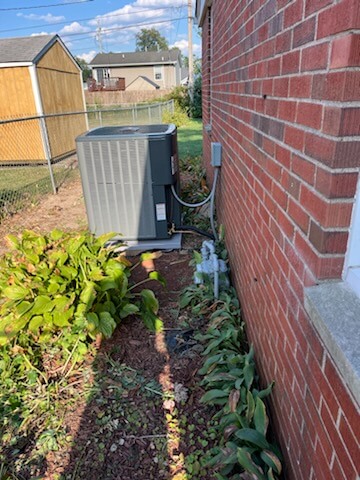
- Many properties use a shared concrete pad or tight mechanical room. Placement of the outdoor unit affects airflow and service access. A crowded pad can lead to higher head pressures and reduced efficiency.
- Water tables and seasonal storms create drainage issues. I routinely check condensate traps and secondary drainage plans to avoid water damage that shows up as mold or ceiling stains weeks after installation.
These factors push me to treat each installation as unique, not as a repeat of a catalog description.
Sizing and load calculation: the numbers that protect comfort One of the most frequent mistakes I see is oversizing. Bigger is not always better. A system that is too large cools the space quickly, then cycles off. The short cycles lead to poor dehumidification, increased wear, and uneven temperatures. Conversely, an undersized system strains continuously and burns out components.
A proper Manual J load calculation remains the foundation of a reliable installation. For a typical 2,000 square foot Wood River home with average insulation and southern exposure, cooling loads might fall anywhere from 24,000 to 36,000 BTU per hour, depending on window area, shading, and occupancy. That range shows why blanket sizing rules fail. Pros measure, calculate, and then translate the result into a matched outdoor condenser, indoor coil, and blower capability.
Airflow and ductwork: the invisible system that controls performance Airflow matters more than most homeowners realize. An installer who simply drops in a new outdoor unit but ignores indoor coil compatibility or existing duct restrictions is setting up a system to underperform. The indoor coil must match the outdoor unit in terms of AC maintenance in Wood River IL B & W Heating & Cooling capacity and refrigerant charge. Otherwise you get suboptimal superheat and subcooling readings and reduced efficiency.
Duct leakage is another silent thief of comfort. I have sealed ducts in attics and crawlspaces and seen return temperatures drop by several degrees and measured energy savings exceed 10 percent. For many homeowners, investing in duct sealing and a smart fan upgrade yields better comfort than upsizing the AC.
Refrigerant handling and commissioning: where reliability is won or lost After correct sizing and ductwork, the installation hinges on proper refrigerant handling and system commissioning. Technicians must pull a deep vacuum to remove moisture and non-condensables before charging. I will not accept an installation unless superheat and subcooling are within manufacturer specifications across operating conditions. These numbers tell me the system has the right refrigerant charge and that the metering device is working.
Many callbacks start with a poor charge. I once responded to a three-year-old system with a noisy compressor. The tech who installed it had AC Repair Wood River IL B & W Heating & Cooling charged by sight and never measured subcooling. The poor charge led to slugging and a failed compressor, and the homeowner paid thousands because the initial job was rushed.
Permits, codes, and warranties: paperwork that protects you Fast installations should be legal installations. Permits ensure that municipal inspections verify safe electrical hookups, proper refrigerant practices, and correct condensate disposal. If a contractor avoids pulling a permit to save time, the homeowner shoulders the risk. Many manufacturers also stipulate that installation must comply with local codes and professional standards for warranties to remain valid.
Ask for written documentation of the permit and an equipment invoice that shows matched indoor and outdoor units, refrigerant charge details, and a start-up report. Companies like B & W Heating & Cooling typically provide these as part of a quality installation package, which streamlines any warranty claims later.
What “fast and reliable” looks like in practice A proper fast installation starts before the truck arrives. The crew should confirm site constraints, equipment sizes, and access. On arrival, a competent team sets up a temporary containment area for tools and parts, verifies electrical service and disconnects, and inspects the indoor unit and ductwork.
Speed comes from preparation and from parallel work. One technician can remove the old condenser while another stages the replacement indoor coil or prepares the pad. Even so, the crucial steps I never skip are vacuuming the lines, charging by weight or by measured subcooling, and running a multi-point checkout. That checkout includes verifying temperature split across the return and supply, measuring amperage draw, and confirming thermostat calibration.
I once installed a 3-ton system in a small bungalow in a single day, including minor duct sealing and a new pad. The homeowner was surprised by how quickly we finished, but what mattered afterward was that the unit ran quietly, kept the house at consistent humidity and temperature, and required no callbacks in the first two years. That kind of result comes from experience, not shortcuts.
Selecting a contractor: questions that separate pros from pretenders When you call for AC installation in Wood River, you should expect clear answers and documentation. Ask these critical questions. If the contractor hesitates or gives vague replies, consider it a red flag.
- Do you perform a Manual J load calculation and can you show the results?
- Will the quote include matched indoor and outdoor units, and can you provide manufacturer start-up documentation at install?
- How will you handle ductwork or condensate drainage issues that you find during the install?
- Are your technicians certified and trained on the specific brand you propose?
- Do you pull permits, and what warranty do you offer on labor?
A trustworthy company will answer these in a clear, specific way. B & W Heating & Cooling, for example, emphasizes documented start-ups and will usually provide a warranty on both equipment and workmanship. If a salesperson pushes only the equipment brand with little attention to installation details, look elsewhere.
Cost realities and budgeting advice Expect to pay for expertise when you want reliable work. A straight replacement that reuses ductwork and electrical might fall into a lower cost band. If you need duct repairs, pad work, or electrical upgrades, the price climbs. For a typical Wood River single-family home, a central AC installation including a mid-range 14 to 16 SEER unit, basic duct sealing, and a proper start-up can range widely depending on home specifics. Get multiple bids and compare apples to apples. The lowest price is rarely the best value if it omits commissioning or subpar refrigerant handling.
Financing and seasonal timing influence total cost. Spring often brings higher demand and longer wait times. Scheduling installs in late winter or early spring can secure lower lead times and sometimes promotional pricing. Some homeowners spread the cost with financing plans offered by reputable contractors. Verify interest rates and any deferred payment terms before agreeing.
Maintenance protects your investment Installing correctly is only half the battle. AC maintenance in Wood River keeps the system running efficiently and identifies problems before they escalate. I recommend professional maintenance at least once a year, ideally in spring before heavy use. A typical maintenance visit checks airflow, measures electrical loads, inspects refrigerant charge, cleans coils, and verifies thermostat function. Simple tasks like replacing filters on schedule can lengthen compressor life substantially.
When homeowners sign a maintenance agreement, they save on emergency service and gain priority scheduling during heat waves. If you have an older system, annual maintenance can extend life by several years and reduce the risk of costly mid-summer failures.
When emergency AC Repair in Wood River IL matters If your system breaks down in July, quick response is vital. But quick does not mean accepting any technician. For emergency repair calls, prioritize contractors who bring diagnostic tools, carry common replacement parts, and provide transparent pricing. A legitimate repair will explain the cause, offer options for repair or replacement, and provide a clear estimate for parts and labor. Beware of patchwork fixes that only mask symptoms.
Choose experience for complicated cases Certain installations require advanced judgment. For example, replacing an R-22 system with a modern refrigerant can involve modifications to the metering device, oil type, and compressor compatibility. I have encountered scenarios where a new condenser seemed compatible on paper, but the evaporator coil type inside the air handler did not match, forcing a more expensive matched coil replacement. That is why experienced technicians, who understand refrigerant transitions and manufacturer pairing, save homeowners time and money.
Final considerations when choosing AC installation in Wood River Fast and reliable AC installation is a combination of accurate sizing, careful ductwork evaluation, precise refrigerant handling, and clean commissioning. It requires paperwork and permits, and a maintenance plan to protect the investment. When you are comparing quotes, look for documentation, clear answers to the diagnostic questions above, and a history of local AC Repair in Wood River IL work. Companies that handle both AC Repair in Wood River IL and AC maintenance in Wood River often spot issues before they fail, because they see patterns in the local housing stock.
Work with contractors who provide a written start-up report, explain warranty terms, and will take responsibility if a system underperforms after installation. If you prioritize that level of accountability, your installation will be both fast and dependable. For many homeowners, that is precisely the reason they call B & W Heating & Cooling, because they want measurable, professional standards rather than promises.
If you need help evaluating a quote or deciding between repair and replacement, gather the model numbers, age of the equipment, and recent service history. Send that information to a trusted local technician and request a documented assessment. That small step saves headaches down the road and keeps summer comfortable.
B & W Heating & Cooling
3925 Blackburn Rd, Edwardsville, IL 62025
+1 (618) 254-0645
[email protected]
Website: https://www.bwheatcool.com/